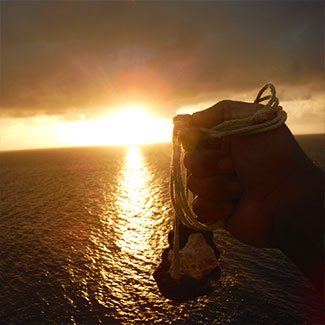
Voice:WeAreGuahan
October 21, 2010 by admin
Filed under 1008, Special Forces
http://www.gopetition.com/petitions/preserve-and-protect-pagat.html
CongratulationsLandonPiercy
October 18, 2010 by admin
Filed under Familia, FokaiCombatUNit, SoCalProject
 A lot of shit happened tonight. Matt fought his heart out & went to sleep like a fucking man, never even considering the tap. You make us proud. Walel Watson caught the very durable striker Manix in his Ovaltine™ in just under 2:00 of round 1. Manix is very tough. Landon Piercy captured the 145lbs UWC title from Mexico’s favorite son Antonio Duarte. Duarte had only tasted defeat once before in 15 fights
ONRA:VoiceOfThePeople
October 15, 2010 by admin
Filed under GlobalGuamMMA, Onra, Special Forces
Reverse: Letting fighters who face charges compete sends wrong message October 15, 2010 *
The decision by a Superior Court of Guam judge to allow two mixed martial arts fighters who face charges in assault cases to fight sends the wrong message to this community. The American Red Cross On Tuesday, Judge Vernon Perez gave the OK for Alex James Castro and Kyle Reyes to be released from their house arrests conditions for one night, so they can fight in PXC 21 on Nov. 13.
PXC 21 is a mixed martial arts event. Castro and Reyes face aggravated assault charges resulting from a fight at a Tumon karaoke bar on Feb. 6. Castro also faces charges in another case, in which he is alleged to have pistol-whipped a man and demanded $3,000 a month. Both men are under house arrest, the conditions of which prevent them from fighting in mixed martial arts events. It makes no sense that two men facing charges of committing violent attacks on others to participate in an event in which they will be allowed to commit violent attacks on their competitors.
The goal of fighters in these events is to either knock out their opponent, or force them to quit under the threat of being choked into unconsciousness or face having a bone broken. Mixed marital arts has been laboring to become accepted as a legitimate sport, on par with boxing, judo or other martial arts. A recent law provided regulations for the sport and requirements for fighters and event promoters. And some mixed martial arts participants have been making an effort to reach out to youngsters and emphasize that the violence is supposed to be kept within the ring, and that the skills from the discipline shouldn’t be used anywhere else.
The judge’s decision to allow these two individuals to fight in a mixed martial arts event sends the opposite message. It gives the perception that it’s OK for trained fighters with deadly skills to use their abilities outside the ring. The night of the fight still is weeks away.
It’s not too late for Perez to do the right thing and reverse his order
Fried Chicken Vs. Sushi Fernando Terere
October 14, 2010 by admin
Filed under BJJ Stuff, FokaiCombatUNit


Terere talks about Fried Chicken vs. Sushi
Dofi : We cook great fried chicken in Guam, what’s your view on this oil soaked bird .
Terere : I love Chicken ! Not so much fried but cooked other ways . What i really try to eat every chance i get to is Sushi, it would be on the top of my list for food choice …
Dofi : Wow great first choice ! Back in Guam there is great fishing by trolling and using nets but one really exciting way to catch fish is by spear , its a pretty cool way to get fresh fish …have you ever gone spear fishing ?
Terere: I have never tried spear fishing ! But i do Boogie board this would be my water sport of choice . I really love Surfing Big waves , the bigger the better ……
Dofi: O man i can tell you some stories about the surf in Guam but then id have to kill you !
Terere: Ha ,Ha , Ha, Ha ……..
Dofi : Have you ever been to the Amazon ?
Terere : I’ve been there four times its a beautiful and lush area in Brazil ….
Dofi : Whats your view on climate change and its affect on the Amazon the world ?
Terere : At this stage of my life the only climate change i am concerned about is the one that is most important to me which is my Body and Mind .. I was away from Jiu Jitsu for six long years and nearly died from this choice .. I dont want that path anymore it destroys your Mind and your world which is your Body and Soul …
Dofi : On behalf of the whole Fokai Familia we extend our prayers and love on your quest to a better your life and your world ….
Terere : Thank you to all at Familian Fokai for your support and prayers , it is a pleasure to be a part of the Fokai Familia and if the oppertunity presents its self maybe one day i may visit Guam .
Dofi : During your travels besides training whay do you do to pass time ?
Terere : Well , i read the Bible . Its my favorite book !
Dofi : Pretty good read if i say so myself ….
Dofi : Its been great chatting to you , i know you have lots of travel plans through europe so ill catch up with you on your return to Ireland later in the year …
Terere : Thanks again for all the support and its is my pleasure to be apart of Familinan Fokai and know that you are all by my side in life and on the Mat …..Ossssss
FoodForThought:TheMonaLisa
October 11, 2010 by admin
Filed under Special Forces
HUNDREDS OF YEARS AFTER STARING AT THE MONA LISA<,MANKIND DISCOVERS…
Italian Musician Finds Hidden Song in Da Vinci’s Mona Lisa
by Erin Barkley in News / November 10th, 2007
 An Italian musician has uncovered evidence of a hidden song in the details of Leonardo Da Vinci’s famed “Mona Lisa”, igniting a worldwide race to see what other paintings by the Renaissance master might have secret tunes embedded in them.
“It was plain as day in the infrared scans,” said Giovanni Constantina in his offices outside Rome, “Tiny musical notes scattered all over the canvas, laying out a very simple but evocative theme… buried in the cracks and daubs of the paint. I personally didn’t see it until my third bottle of Merlot, so it’s no surprise it’s been hidden all this time.”
Painted from 1492 to 1494, the “Mona Lisa” has also come into the news recently as evidence mounts that the subtle smile on the face of the iconic woman may have once been a pouty mouth, that was eventually over-painted. Constantina said that it was the recent break-up with his girlfriend that lead to the binge-drinking and Mona Lisa-adoration that lead to his discovery: “I needed someone to keep me company, and what do you know? She was singing me a song!”
Constantina’s discovery has prompted other musicians to search for music in Da Vinci’s broader works. Just last week, another Italian composer, Giovanni Maria Pala, found a second song in “The Last Supper”, which Constantina describes as “a real downer”. Indeed, the genius painter seems to have been in a more sombre mood when painting that other work, rather than the peppy, up-tempo one found in the “Mona Lisa”.
Also included in the painting are apparent lyrics to the song, which are written in Da Vinci’s own secret code. PTTBT consulted famed cryptographer and Da Vinci expert Dale McMaster, who helped translate the song as thus:
Oops
I did it again
I played with your heart, got lost in the game
Oh baby, baby
Oops
You think I’m in love
That I’m sent from above
I’m not that innocent.
Experts at the Da Vinci Institute at the University of Milan refused comment, citing personal devastation and impending substance abuse.
GoodVibrations:CNN.com
October 11, 2010 by admin
Filed under 1008, Special Forces
Editor’s note: TED is a nonprofit organization devoted to “Ideas worth spreading,” which it makes available through talks posted on its website. Julian Treasure, the author of “Sound Business,” is chairman of UK-based audio branding specialist The Sound Agency and an international speaker on sound’s effects on people, on business and on society.
(CNN) — Most of us have become so used to suppressing noise that we don’t think much about what we’re hearing, or about how we listen. Yet our well-being is now being seriously damaged by modern sound. Here are 10 things about sound and health that you may not know:
1.) You are a chord. This is obvious from physics, though it’s admittedly somewhat metaphorical to call the combined rhythms and vibrations within a human being a chord, which we usually understand to be an aesthetically pleasant audible collection of tones. But “the fundamental characteristic of nature is periodic functioning in frequency, or musical pitch,” according to C.T. Eagle. Matter is vibrating energy; therefore, we are a collection of vibrations of many kinds, which can be considered a chord.
2.) One definition of health may be that that chord is in complete harmony. The World Health Organization defines health as “a state of complete physical, mental, and social well-being and not merely the absence of disease or infirmity” which opens at least three dimensions to the concept. On a philosophical level, Plato, Socrates, Pythagoras and Confucius all wrote at length about the relationship between harmony, music and health (both social and physical). Here’s Socrates: “Rhythm and harmony find their way into the inward places of the soul, on which they mightily fasten, imparting grace, and making the soul of him who is rightly educated graceful, or of him who is ill-educated ungraceful.”
Watch an interview with Julian Treasure
3.) We see one octave; we hear ten. An octave is a doubling in frequency. The visual spectrum in frequency terms is 400-790 THz, so it’s just under one octave. Humans with great hearing can hear from 20 Hz to 20 KHz, which is ten octaves.
4.) We adopt listening positions. Listening positions are a useful set of perspectives that can help people to be more conscious and effective in communication — because expert listening can be just as powerful as speaking. For example, men typically adopt a reductive listening position, listening for something, often a point or solution.
Women, by contrast, typically adopt an expansive listening position, enjoying the journey, going with the flow. When unconscious, this mismatch causes a lot of arguments.
Other listening positions include judgmental (or critical), active (or reflective), passive (or meditative) and so on. Some are well known and widely used; for example, active listening is trained into many therapists, counselors and educators.
5.) Noise harms and even kills. There is now wealth of evidence about the harmful effect of noise, and yet most people still consider noise a local matter, not the major global issue it has become.
According to a 1999 U.S. Census report, Americans named noise as the number one problem in neighborhoods. Of the households surveyed, 11.3 percent stated that street or traffic noise was bothersome, and 4.4 percent said it was so bad that they wanted to move. More Americans are bothered by noise than by crime, odors and other problems listed under “other bothersome conditions.”
TED.com: Music is medicine, music is sanity
The European Union says: “Around 20% of the Union’s population or close on 80 million people suffer from noise levels that scientists and health experts consider to be unacceptable, where most people become annoyed, where sleep is disturbed and where adverse health effects are to be feared. An additional 170 million citizens are living in so-called ‘grey areas’ where the noise levels are such to cause serious annoyance during the daytime.”
The World Health Organization says: “Traffic noise alone is harming the health of almost every third person in the WHO European Region. One in five Europeans is regularly exposed to sound levels at night that could significantly damage health.”
The WHO is also the source for the startling statistic about noise killing 200,000 people a year. Its findings (LARES report) estimate that 3 percent of deaths from ischemic heart disease result from long-term exposure to noise. With 7 million deaths a year globally, that means 210,000 people are dying of noise every year.
TED.com: Jose Abreu on kids transformed by music
The cost of noise to society is astronomical. The EU again: “Present economic estimates of the annual damage in the EU due to environmental noise range from EUR 13 billion to 38 billion. Elements that contribute are a reduction of housing prices, medical costs, reduced possibilities of land use and cost of lost labour days.” (Future Noise Policy European Commission Green Paper 1996).
Then there is the effect of noise on social behavior. The U.S. report “Noise and its effects” (Administrative Conference of the United States, Alice Suter, 1991) says: “Even moderate noise levels can increase anxiety, decrease the incidence of helping behavior, and increase the risk of hostile behavior in experimental subjects. These effects may, to some extent, help explain the “dehumanization” of today’s urban environment.”
Perhaps Confucius and Socrates have a point.
6.) Schizophonia is unhealthy. “Schizophonia” describes a state where what you hear and what you see are unrelated. The word was coined by the great Canadian audiologist Murray Schafer and was intended to communicate unhealthiness. Schafer explains: “I coined the term schizophonia intending it to be a nervous word. Related to schizophrenia, I wanted it to convey the same sense of aberration and drama.”
My assertion that continual schizophonia is unhealthy is a hypothesis that science could and should test, both at personal and also a social level. You have only to consider the bizarre jollity of train carriages now — full of lively conversation but none of it with anyone else in the carriage — to entertain the possibility that this is somehow unnatural. Old-style silence at least had the virtue of being an honest lack of connection with those around us. Now we ignore our neighbors, merrily discussing intimate details of our lives as if the people around us simply don’t exist. Surely this is not a positive social phenomenon.
7. Compressed music makes you tired. However clever the technology and the psychoacoustic algorithms applied, there are many issues with data compression of music, as discussed in this excellent article by Robert Harley back in 1991. My assertion that listening to highly compressed music makes people tired and irritable is based on personal and anecdotal experience – again it’s one that I hope will be tested by researchers.
8. Headphone abuse is creating deaf kids. Over 19 percent of American 12 to 19 years old exhibited some hearing loss in 2005-2006, an increase of almost 5 percent since 1988-94 (according to a study in the Journal of the American Medical Association by Josef Shargorodsky et al, reported with comments from the researchers here). One university study found that 61 percent of freshmen showed hearing loss (Leeds 2001).
Many audiologists use the rule of thumb that your headphones are too loud if you can’t hear someone talking loudly to you. For example, Robert Fifer, an associate professor of audiology and speech pathology at the University of Miami Leonard M. Miller School of Medicine, says: “If you can still hear what people are saying around you, you are at a safe level. If the volume is turned so loudly that you can no longer hear conversation around you, or if someone has to shout at you at a distance of about 2 or 3 feet to get your attention, then you are up in the hazardous noise range.”
TED.com: Evelyn Glennie shows how to listen
9. Natural sound and silence are good for you. These assertions seem to be uncontroversial. Perhaps they resonate with everyone’s experience or instinct.
10. Sound can heal. Both music therapy and sound therapy can be categorized as “sound healing.” Music therapy (the use of music to improve health) is a well-established form of treatment in the context of mainstream medicine for many conditions, including dementia and autism.
Less mainstream, though intellectually no more difficult to accept, is sound therapy: the use of tones or sounds to improve health through entrainment (affecting one oscillator with a stronger one). This is long-established: shamanic and community chant and the use of various resonators like bells and gongs, date back thousands of years and are still in use in many cultures around the world.
Just because something is pre-Enlightenment and not done in hospitals doesn’t mean that it’s new-age BS. Doubtless there are charlatans offering snake oil (as in many fields), but I suspect there is also much to learn, and just as herbal medicine gave rise to many of the drugs we use today, I suspect there are rich resources and fascinating insights to be gleaned when science starts to unpack the traditions of sound healing.
I hope these thoughts make a contribution to raising awareness of sound and its effects on health. I welcome your reaction, and I will check this forum and respond.
The opinions expressed in this commentary are solely those of Julian Treasure.
JustAddWater:RobKiteboarder
October 11, 2010 by admin
Filed under GuamWatermen'sClub
Special Thanks to Rob emmanuel who is ALWAYS looking out. Check out this custom logoed training kite for those who literally want to catch some air!


Photos of photos by FokaiFotography. Actual Photos by JRMANN
http://www.flickr.com/photos/jrmannn/page6/
FokaiBeltTying:TricksOfTheTrade
October 9, 2010 by admin
Filed under BJJ Stuff, Special Forces
MikeTaijeronDemonstrates a (better) way of tying your belt.
1008:InReflection
October 9, 2010 by admin
Filed under 1008, Special Forces
Since about 1998,Every October 8th has been a very special day for Fokai.
10/08 has since revealed valuable lessons attained in reflection of the events that transpire within that window of conscious inspiration. Originally waiting for messages from above, we often find that messages can also come from inside. the aideal allignment comes when the inside is in tune with the above. from this comes peace.
2010 has brought to the front the appreciation of life, the appreciation of love, the appreciation on the love of life, and the appreciation of the life of love.
A DAY IN THE LIGHT
Hopefully moments in the darkness will help us to appreciate the light but we have to understand that light comes in all different colors to weave its way through the nooks and crannies to bring us a better understanding.
When we reflect on how valuable life can be,w e realize how important it is to welcome and embrace new life as an potential archive of immortal glory.
And realize that the light we leave behind us eventually brightnes the trails in front of us. Everyone has moments of weakness and no man is an island.
What is the Meaning of Life?
Finding happiness in making others happy.
All Day–CelebrateLife
FokaiPhotography:CotchYouLookin
http://cotchyoulookin.com/site/?p=303
Elevate Your Mind with the FokaiFamilia and 1008.